


Essential Stage Lighting Terminology Every Event Planner Should Know
- Fernanda Alves
- Aug 14
- 4 min read

Lighting plays a crucial role in creating the right atmosphere and focus during any event. Whether you are organizing a concert, theater production, or corporate gathering, understanding stage lighting terms will help you communicate clearly with your technical team and make informed decisions. This guide covers the basics and some intelligent lighting jargon that every event planner and beginner lighting technician should know.

Understanding the Basics of Stage Lighting Terminology
Before diving into complex terms, it’s important to grasp the fundamental concepts of stage lighting. These basics form the foundation of your event’s visual experience.
Fixture
The device that produces light, such as a spotlight, floodlight, or LED panel. Fixtures come in many types and sizes depending on the effect needed.
Beam
The shape and size of the light emitted from a fixture. Beams can be narrow for focused spots or wide for general illumination.
Gobo
A stencil or template placed inside or in front of a fixture to shape the light into patterns or images. Gobos add texture and interest to lighting design.
Color Gel
A transparent colored sheet placed in front of a light to change its color. Modern intelligent lighting often uses LEDs to change colors without gels.
DMX
The digital protocol used to control lighting fixtures. DMX allows you to program and synchronize multiple lights from a single console.
Knowing these terms will help you understand how lighting designers create moods and direct attention during your event.
Key Stage Lighting Terms for Event Planning
When discussing your event with lighting professionals, these stage lighting terms will come up frequently. Familiarity with them will make your conversations smoother and more productive.
Wash
A broad, even light that covers a large area. Wash lights are used to illuminate backgrounds or groups of performers.
Spotlight
A focused beam of light that highlights a specific performer or object on stage. Spotlights can be manually operated or automated.
Intensity
The brightness of a light source. Adjusting intensity helps create contrast and depth on stage.
Cue
A pre-programmed lighting change triggered during the event. Cues control when lights change color, position, or intensity.
Followspot
A manually operated spotlight that tracks a performer as they move around the stage.
Blackout
A moment when all stage lights are turned off, often used for dramatic effect or scene changes.
Throw Distance
The distance between the lighting fixture and the area it illuminates. This affects the size and sharpness of the beam.
Understanding these terms will help you describe your vision clearly and ensure the lighting team delivers exactly what you want.
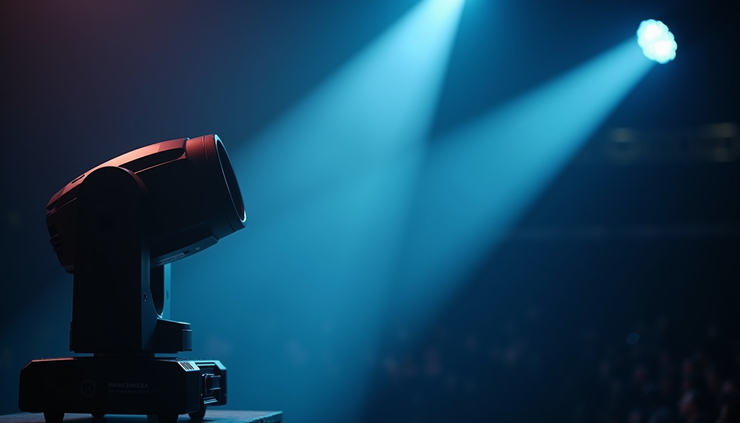
Intelligent Lighting Jargon You Should Know
Intelligent lighting refers to fixtures that can move, change color, and adjust beam shape automatically. These advanced lights add flexibility and creativity to event lighting but come with their own terminology.
Moving Head
A type of intelligent fixture that can pan and tilt to move the beam across the stage.
Pan and Tilt
The horizontal (pan) and vertical (tilt) movement of a moving head light.
Zoom
The ability to change the beam size from narrow to wide without moving the fixture.
Color Wheel
A rotating wheel inside the fixture with different color filters. The light passes through to change colors quickly.
Shutter or Iris
Mechanisms that control the shape or size of the beam. Shutters can create sharp edges or block parts of the beam.
Pixel Mapping
A technique where multiple intelligent lights are controlled to create patterns or images across the stage.
Fixture Profile
The specific model and capabilities of an intelligent light, important for programming and setup.
Knowing intelligent lighting jargon helps you understand what your lighting team can achieve and how to plan complex lighting effects.
Using an Event Lighting Dictionary to Improve Communication
An event lighting dictionary is a valuable resource for planners and technicians alike. It provides clear definitions of terms and helps avoid misunderstandings during event preparation.
Use the dictionary to familiarize yourself with new terms before meetings.
Share key terms with your team to ensure everyone is on the same page.
Refer to it when reviewing lighting plans or cue sheets.
This approach saves time and reduces errors, leading to smoother event execution.

Practical Tips for Event Planners Working with Lighting Teams
Ask for Visual Examples
Request photos or videos of previous lighting setups to understand what is possible.
Clarify Your Vision
Use stage lighting terms to describe mood, focus, and color preferences clearly.
Plan for Flexibility
Intelligent lighting allows last-minute changes. Discuss backup plans and cue adjustments.
Attend Technical Rehearsals
Seeing the lighting in action helps you make informed decisions and catch issues early.
Keep Learning
Lighting technology evolves fast. Regularly update your knowledge of stage lighting terms and intelligent lighting jargon.
By applying these tips, you can collaborate effectively with lighting professionals and create memorable events.
Mastering stage lighting terms and the event lighting dictionary empowers you to plan better events and communicate confidently with your technical team. Start with the basics, explore intelligent lighting jargon, and partner with the experts at MixStar Audio to bring your event vision to life with light.
Ready to elevate your stage design? Book a consultation with our team today, and let's make sure your next event shines brighter than ever.


Comments